
A Beginner's Guide to Identifying British Native Trees

Why Trees Reward a Closer Look
Most of us can spot an oak at a glance, or name a birch from the car. Ask which oak, though, or what that grey-trunked tree with the ridged bark is, and things get murky. Learning to identify British native trees is less about memorising a long list than about learning a handful of features — leaf, bark, bud — and applying them patiently, one at a time. Give it a season and you will never walk a footpath in quite the same way again.
The encouraging news is that most common natives can be narrowed down with three simple questions. What are the leaves doing? What is the bark like? And if the leaves have fallen, what do the buds tell you?
Start with the Leaves
From spring to autumn, leaves are the easiest place to begin — but only if you look properly. First ask whether the leaves are simple, a single blade, or compound, several leaflets sharing one stalk. Then check how they sit on the twig: alternate, staggered along it, or opposite, in neat pairs. Among our natives, opposite leaves are the minority — ash, field maple and holly — so spotting them instantly narrows the field.
- Oak: wavy, deeply lobed leaves. Pedunculate oak has leaves on almost no stalk with acorns on long stalks; sessile oak is the reverse.
- Ash: compound leaves with four to six pairs of leaflets plus one at the tip, set opposite on the twig.
- Beech: oval, glossy leaves with a wavy, silky-hairy edge, often clinging on well into winter.
- Hawthorn: small, deeply cut leaves with three to five lobes, carried on thorny twigs.
- Hazel: round leaves with a heart-shaped base and a double-toothed edge, softly hairy to the touch.
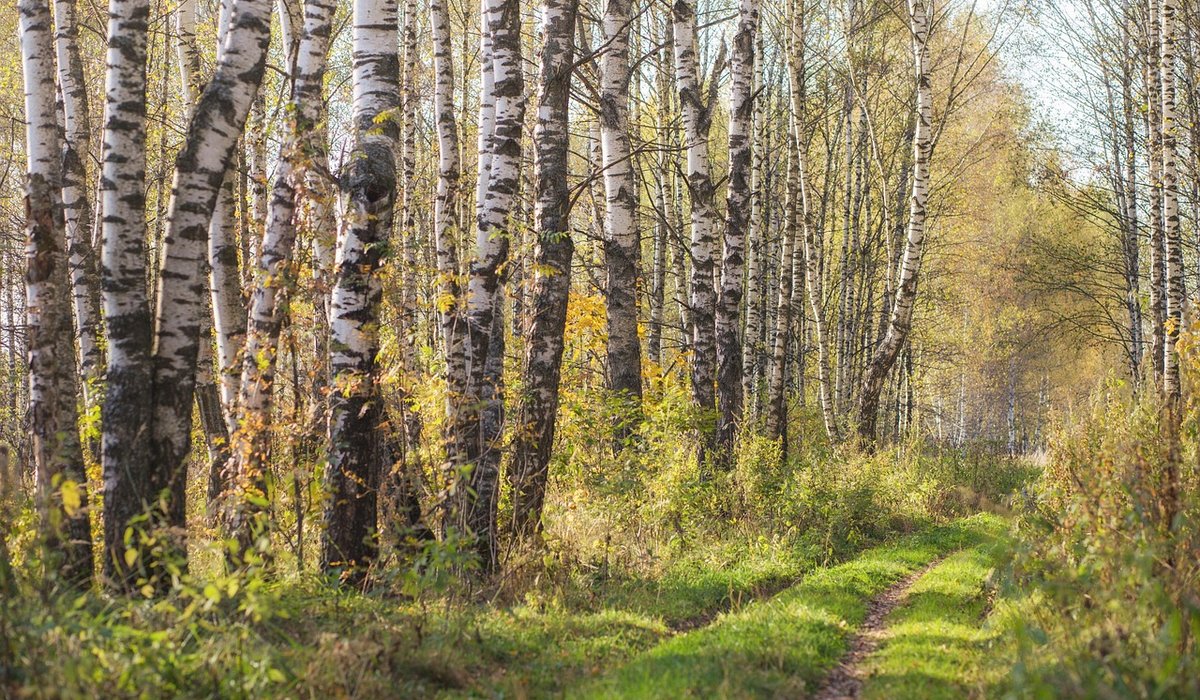
- Silver birch: small triangular leaves with double teeth, light and fluttering — a classic woodland pioneer.
Turn a leaf over before you decide. Hairs, vein patterns and even the smell of a crushed leaf can settle an identification when two species look frustratingly similar.
Bark Tells a Slower Story
Bark is useful, but easy to over-trust. Young trees are far smoother than old ones, and a tree in deep shade may look quite different from one growing in the open. Treat bark as a supporting clue rather than proof — though a few species are unmistakable at any age.
- Silver birch: white, papery bark peeling in horizontal strips, with dark diamonds at the base of the trunk.
- Beech: smooth, pale grey bark, often likened to elephant hide, sometimes with faint horizontal wrinkles.
- Ash: smooth and grey-green when young, developing diamond-shaped fissures on older trunks.
- Oak: deeply fissured, rugged, grey-brown bark, frequently cloaked in moss and lichen.
- Wild cherry: reddish-brown bark banded with prominent horizontal lines.
Buds: The Winter Giveaway
Buds are the secret weapon of the winter woods. Once the canopy is bare, a twig in the hand tells you almost everything you need. Learn ash and beech and you will identify leafless trees with real confidence.
- Ash: sooty-black, velvety buds in opposite pairs, shaped a little like tiny hooves.
- Beech: long, slender, sharply pointed copper-brown buds, held away from the twig.
- Oak: a cluster of small, brown, scaly buds bunched at the twig tip.
- Hazel: blunt, greenish-brown oval buds, with catkins dangling from late winter.
- Rowan: grey, slightly woolly buds; pinnate leaves with serrated leaflets in summer.
A cheap 10x hand lens is worth carrying. Bud scales, fine hairs and the tiny leaf scars left on a twig become clear under magnification, and they are often what separates one species from another.
Tips for a Confident First Identification
- Pick up a fallen leaf or twig rather than pulling from a living tree, and never strip bark — it leaves a wound and a scar.
- Check three features, not one. A single leaf can mislead; leaf, bark and bud together rarely do.
- Read the setting. Alder and willow keep their feet wet by rivers and ponds; hazel and field maple favour hedgerows and coppiced woods; birch prefers heath and open ground.
- Note the season. Catkins in February, winged seeds in autumn and leaf colour in October are all useful evidence.
- Keep a small notebook or a sketch. Drawing a bud forces you to notice details a photograph quietly hides.
- Follow the Countryside Code, and give nesting birds space between March and August — a quiet retreat is better than a close look.
Identification is a skill that builds quietly, tree by tree. Start with three or four species you meet regularly, get to know them in every season, and the rest of the woodland will begin to introduce itself.

Joeby Ragpa
This template is so awesome. I didn’t expect so many features inside. E-commerce pages are very useful, you can launch your online store in few seconds. I will rate 5 stars.
ReplyAlexander Samokhin
This template is so awesome. I didn’t expect so many features inside. E-commerce pages are very useful, you can launch your online store in few seconds. I will rate 5 stars.
ReplyChris Root
This template is so awesome. I didn’t expect so many features inside. E-commerce pages are very useful, you can launch your online store in few seconds. I will rate 5 stars.
Reply